

Ask ten brownie lovers what the perfect brownie tastes like, and you will get ten slightly different answers. Some will describe a dense, almost truffle-like center. Others want something that pulls apart with a little resistance, leaving a chew that lingers. And then there are the people who want a brownie warm enough that the center is barely set, pooling slightly on the plate. None of them are wrong. They just want different things.
At Treat Dreams Inc, we think about brownie texture more than most people would expect a bakery to. It is not a background detail. It is one of the first decisions made when developing any new flavor. The way a brownie feels in your mouth determines whether it is forgettable or the kind of thing you talk about on the drive home. And if you have been searching for the best brownies near me in the Phoenix metro area and felt like everything you tried was missing something, this guide is for you.
Let us walk through exactly what separates a chewy brownie from a fudgy one from a gooey one, what drives those differences, and how we approach texture in our small-batch kitchen.
Flavor gets most of the attention in dessert conversations. And yes, flavor matters enormously. But texture is the thing that determines whether a dessert satisfies you or just fills you. There is a reason a perfectly chewy cookie feels emotionally different from a dry, crumbly one even if both taste like chocolate chip. The sensory experience of eating is physical, not just chemical.
Brownies are a particularly interesting case because the same base recipe — chocolate, butter, eggs, sugar, a small amount of flour — can produce wildly different results depending on ratios, technique, and temperature. That is not an exaggeration. The fat-to-flour ratio, the number of eggs, whether you beat the batter or barely stir it, and how long you pull the pan from the oven can each shift the final texture in a meaningful way.
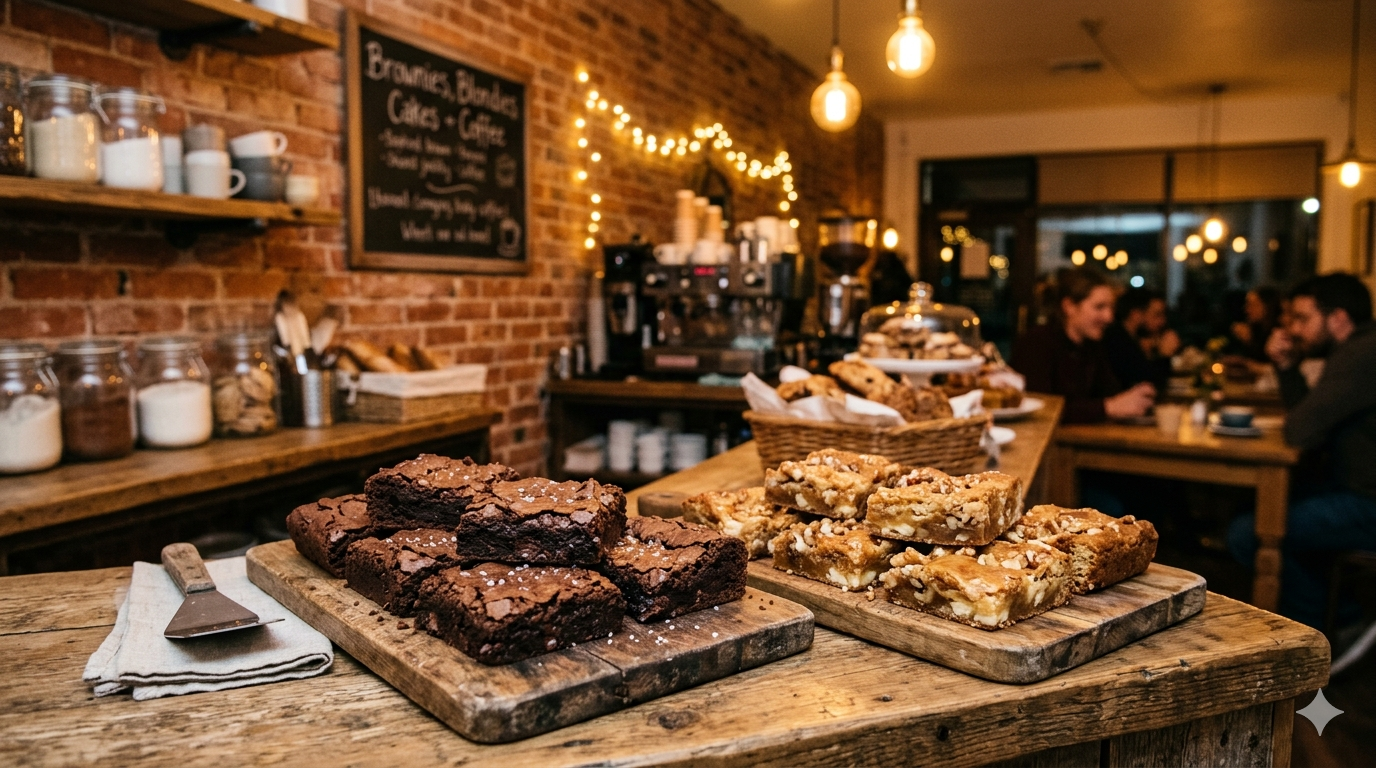
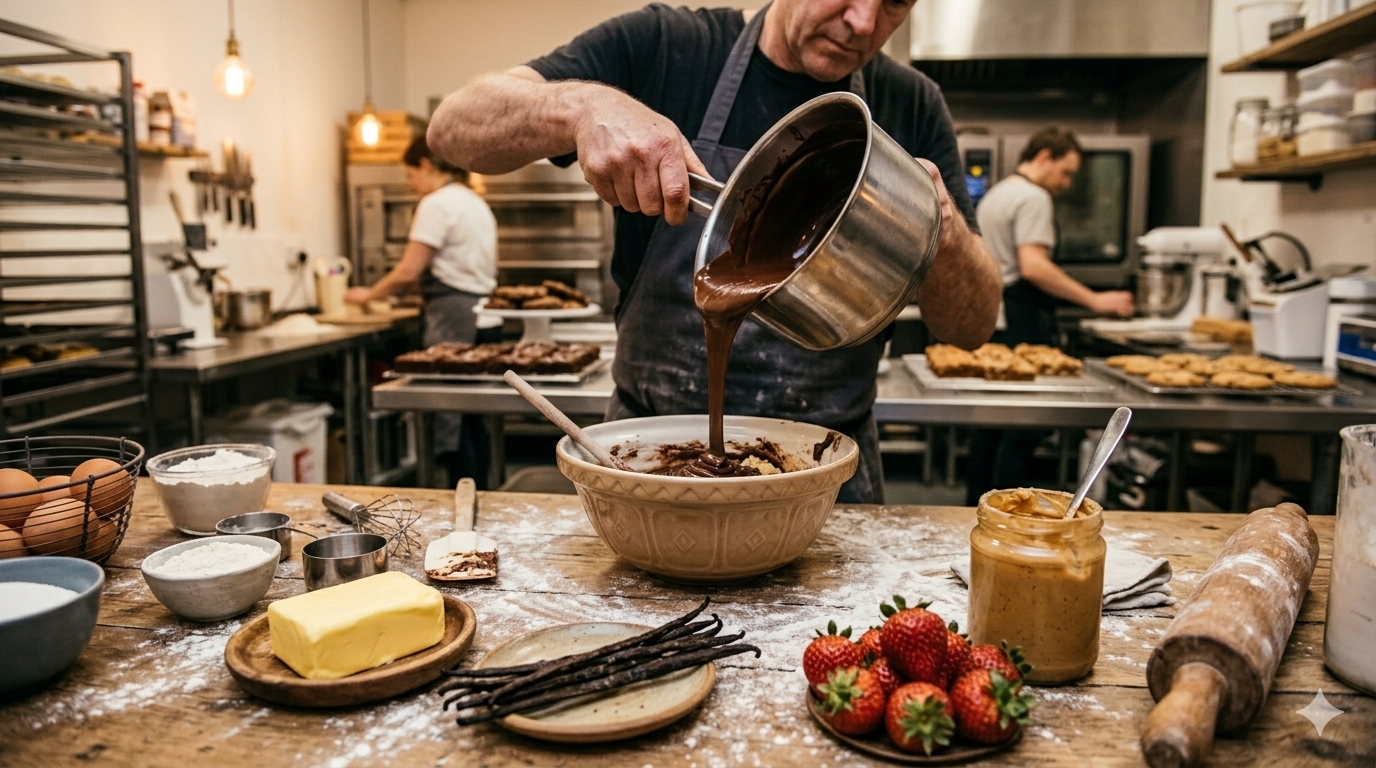
This is also what makes brownies so difficult to do well at scale. When you are making thousands of units, you cannot make the small adjustments that small-batch baking allows. At Treat Dreams, our limited production schedule — Thursday and Friday from 5 PM to 10 PM, Saturday and Sunday from 3 PM to 10 PM — is a feature, not a limitation. It means our bakers have genuine control over what comes out of the oven. You can see our current availability and flavors on the weekly menu page.
A chewy brownie has resistance. When you break a piece apart, it does not crumble and it does not stretch like taffy. It pulls back slightly, holds its shape for a moment, then gives way cleanly. The top surface is often slightly crisp, sometimes bearing that signature crinkled skin that brownie enthusiasts actively seek out. The interior is moist but not wet, dense but not quite as heavy as a fudgy brownie.
Chew in a brownie comes primarily from two sources: the sugar type and the protein structure. Recipes that lean heavily on granulated white sugar tend to produce more chew because of how white sugar behaves during baking. It dissolves, then recrystallizes slightly as the brownie cools, creating that characteristic pull-back texture. Brown sugar, which contains molasses, adds moisture and a slightly caramel depth but softens the chew somewhat.
Eggs also play a role here. The ratio of whole eggs to egg yolks directly affects chew. Whole eggs bring more protein (from the whites), which sets during baking and creates structure. A brownie with a higher proportion of whole eggs will generally come out chewier than one that uses primarily yolks.
The amount of flour matters too. A slightly higher flour ratio compared to fat creates more gluten development, which adds structure and, by extension, chew. But push that too far and you cross into cake territory, which is a different product entirely.
Chewy brownies are for people who want a brownie that feels like it has substance. It is the bar you can eat slowly, the one that satisfies piece by piece. If you have ever ordered a brownie somewhere and felt like it dissolved the moment it hit your tongue, you probably want a chewy one.
A fudgy brownie is closer to a truffle than a cake. It is dense in a way that feels intentional, almost luxurious. The center barely holds its form when you slice it — not because it is underbaked, but because the fat content is high enough that the protein structure stays loose and compact at the same time. A well-made fudgy brownie melts on contact with your tongue rather than requiring you to chew through it.
Fudginess is almost entirely a function of fat-to-flour ratio. A recipe that skews heavily toward butter and chocolate relative to flour will produce a denser, more compact crumb with very little structure holding it together. That is not a flaw — it is exactly what the recipe is designed to do.
Egg yolks contribute significantly here. Yolks are fat-rich and emulsify the batter differently than whole eggs, creating a smoother, more cohesive texture in the finished product. Many fudgy brownie recipes call for more yolks and fewer whites, or even no whites at all. The fat from both the butter and the yolks works together to coat every flour particle, limiting gluten development and keeping the crumb tight.
Chocolate type matters more in fudgy brownies than in chewy ones. Using actual melted chocolate rather than only cocoa powder brings more fat into the batter (cocoa butter) and creates that dense, intense chocolate hit that fudgy brownies are known for. Higher cacao percentages bring bitterness that balances the sugar and makes the chocolate flavor feel complex rather than one-dimensional.
Fudgy brownies are for chocolate lovers who want the experience to be about the chocolate and almost nothing else. If a single square of a fudgy brownie feels genuinely satisfying — not because it is small but because the richness hits hard — that is the product doing its job.
A gooey brownie is the most polarizing of the three textures, and also the hardest to get right consistently. The edges are fully set and might even be slightly crisp. The center is soft enough to spoon. There is an undeniable indulgence to it — when it is done well, it feels like the brownie is still in the process of becoming. Warm, molten, not quite finished.
Gooey texture is primarily a product of underbaking relative to the other styles. But calling it “underbaked” sounds like a mistake. It is not. It is a deliberate choice to pull the pan earlier, while the center still has significant moisture and has not fully set its protein structure. As the brownie cools slightly, it firms up enough to hold its shape but retains that soft, almost molten quality at its core.
Recipes built around gooey texture typically use more sugar, which holds moisture in the baked product and lowers the temperature at which the batter sets. More sugar means the center can stay soft even after the edges have set completely. Some formulations also incorporate sweetened condensed milk or other high-sugar dairy products for exactly this reason.
Temperature during baking matters enormously. A slightly lower oven temperature over a longer bake time will produce a different gooey texture than a higher temperature over a shorter window. The crust behavior at the top — whether it cracks, shines, or stays matte — is also affected by oven temperature and sugar content.
Gooey brownies are for people who experience food as an event rather than a habit. They are best eaten warm, ideally within the first hour of coming out of the oven, and they reward attention. If you want a brownie that makes you stop and actually notice what is happening in your mouth, the gooey texture is designed for that.
Every flavor on the Treat Dreams menu started with a texture decision, not a flavor one. The flavor follows the texture because different textures carry flavor differently. A fudgy base amplifies bold chocolate and bitter notes. A chewy base works better with mix-ins and contrasting flavors because there is structure to hold them. A gooey center lets warm, melty additions like caramel or fruit compote stay active in the eating experience.
Take our Caramel Ninja Turtle, for instance. The caramel element needed a base that would not compete with it texturally. A dense fudgy brownie would have made the caramel feel redundant. We landed on a base that leans chewy, which lets the caramel sit on top and melt into each bite separately rather than blending into a single undifferentiated sweetness.
The Pineapple Rum Chum blondie is a different conversation entirely because blondies operate under different rules. Without cocoa in the batter, the fat and sugar ratios shift, and the texture goals shift with them. Our blondies are developed to be dense and slightly chewy, with a slightly crisp outer edge that contrasts the soft interior.
If you want to understand the full texture difference between our brownies and blondies, our previous blog on brownies vs. blondies covers that in detail.
Large-scale production does not allow for the kind of texture control we are describing. When batches are massive, ovens cycle, batter sits at varying temperatures before it bakes, and the precision required to maintain a consistent gooey center or a specific level of chew becomes nearly impossible to guarantee. You end up aiming for a texture that is merely acceptable rather than one that is exactly right.
Our small-batch approach means our bakers are watching each pan. Doneness is judged by visual cues and touch, not just a timer. That makes a real difference in the finished product, and it is a core part of why people searching for the best brownies near me in Arizona keep coming back to us. You are not getting something manufactured. You are getting something made.
We also use all-natural ingredients across every recipe — real butter, real chocolate, real dairy. No shortening, no artificial fats, no cocoa substitute. The difference in texture between butter and shortening is significant. Butter’s water content contributes to steam during baking, which affects crumb structure. Shortening produces a different mouthfeel, one that tends to feel heavier and less clean on the palate. We choose butter specifically because it produces the textures we are aiming for.
Understanding texture also helps you predict which flavors are going to land the way they are supposed to. Here is how we generally think about it:
A chewy brownie base works well with bold, contrasting flavors — citrus zest, sea salt, coffee, fruity jam layers. The structural resistance of the chew gives you time to taste the components separately, which makes complexity more readable.
A fudgy brownie base is best when the goal is a single dominant flavor note. Intense dark chocolate, deep caramel, or an earthy matcha integration — all of these shine on a fudgy canvas because the melt-on-the-tongue quality lets the flavor release all at once rather than building piece by piece.
A gooey center works with warm, melty additions that would be lost in a fully set brownie. Think melted nut butter swirls, molten caramel pockets, or cream cheese ribbons that stay soft and fluid when the brownie is warm. These components keep their character in a gooey brownie in a way they cannot when the batter sets fully around them.
Talking about brownie texture theory is interesting. Eating the real thing is better. Treat Dreams Inc operates at two Arizona locations — 8302 W Glendale Ave in Glendale (phone: 623-200-5556) and 13802 N Verbena St in El Mirage (phone: 623-253-5002). Visit our locations page for maps and details.
We are a family-owned, small-batch bakery that takes the craft of dessert seriously — not in a pretentious way, but in the way of people who genuinely believe that food made with care and intention tastes different from food made for volume. Every recipe we develop goes through real testing. Every batch is made fresh during our operating hours. Nothing sits in a case for days.
If you are in the Phoenix metro area and you have been looking for a baked dessert experience that actually delivers on what a great brownie should feel like, come find us. You can also shop online if you want to plan ahead or order for a gathering. Have questions? Reach out at cs@treatdreamsinc.com and someone from our team will get back to you.
And if you are curious about the full story of how Treat Dreams became the brownie destination it is in Arizona, the our story page is worth a read.
What is the difference between a chewy and a fudgy brownie?
A chewy brownie has more structural resistance — it pulls apart slightly when broken and holds its shape when you bite into it. It often has a glossy, crinkled top crust. A fudgy brownie is denser and richer, almost truffle-like in texture, and melts on the tongue rather than requiring you to chew through it. The key variables are the fat-to-flour ratio and the egg composition.
How do I know if a brownie is gooey vs. underbaked?
A gooey brownie is intentionally soft at the center with a fully set edge. When you cut it, the edges are firm and hold their structure, while the interior yields softly. An underbaked brownie will be liquid or nearly so in the center and may not hold any structure at all when cut. The distinction is intentionality — gooey texture is achieved through specific ratios and a precise pull time, not simply by taking the pan out too early.
Which brownie texture is the most popular?
Fudgy brownies tend to win most consumer preference surveys, primarily because the intensity of the chocolate flavor is highest in a fudgy texture. However, chewy brownies have a dedicated following among people who prefer a more structured eating experience. At Treat Dreams, we see consistent demand for both.
What makes Treat Dreams brownies different from other bakeries?
Treat Dreams Inc uses all-natural ingredients, makes everything in small batches during specific operating hours, and approaches each recipe with genuine attention to texture as a primary design element. The flavors on the Treat Dreams menu are developed in-house and rotate regularly. You are not getting a mass-produced product stored in a display case — you are getting something made that day.
Where can I find the best brownies near me in Arizona?
If you are in the Phoenix metro area — particularly Glendale or El Mirage — Treat Dreams Inc is your closest answer. We are a family-owned bakery with two locations in Arizona. Visit the locations page for addresses, hours, and directions.
Does the type of chocolate affect brownie texture?
Yes, significantly. Using melted chocolate rather than cocoa powder alone adds cocoa butter (a fat), which contributes to a denser, fudgier texture. Higher cacao percentage chocolate brings bitterness that balances sweetness and creates a more complex final flavor. At Treat Dreams, we use real chocolate across our recipes rather than relying solely on cocoa powder substitutes.
Do blondies have the same texture variations as brownies?
Blondies follow similar principles but operate differently because there is no cocoa in the batter. The texture spectrum in blondies runs from dense and chewy to soft and cakey, depending on fat-to-flour ratio and sugar type. Our blondies at Treat Dreams are developed to be on the dense, chewy end of that spectrum. For a deeper look at the differences between brownies and blondies, check out our post on what separates the two.
What are Treat Dreams’ business hours?
Treat Dreams Inc is open Thursday and Friday from 5 PM to 10 PM, and Saturday and Sunday from 3 PM to 10 PM. Our schedule is intentionally limited to keep production fresh and quality high.
Can I order Treat Dreams brownies online?
Yes. You can browse and place an order through the Treat Dreams online shop. This is the best option if you want to plan ahead for a gathering or event.
Find Us in Arizona
Location 1: 8302 W Glendale Ave, Glendale, AZ 85305 | 623-200-5556
Location 2: 13802 N Verbena St, El Mirage, AZ 85335 | 623-253-5002
Email: cs@treatdreamsinc.com
Hours: Thursday – Friday 5 PM – 10 PM | Saturday – Sunday 3 PM – 10 PM