
The difference between mass-produced desserts and truly exceptional treats often comes down to one word: care. At Treat Dreams, that care manifests in every aspect of our process, from how we source ingredients to the moment a finished dessert makes its way to a customer. Understanding what happens behind the scenes helps explain why our small-batch desserts taste noticeably different from what you’ll find at typical bakeries or grocery stores.
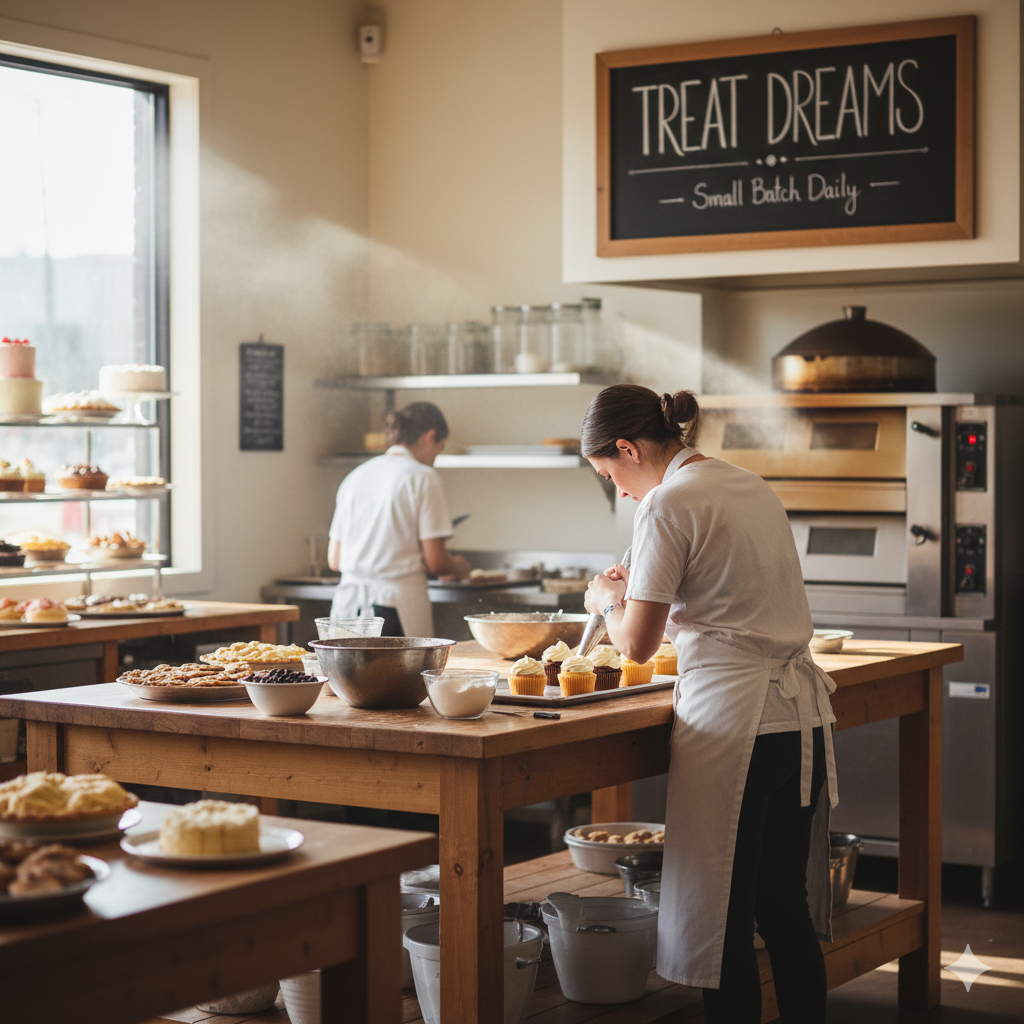
Walking into the Treat Dreams kitchen early in the day, you’d notice several things immediately. The space is meticulously organized, with ingredients measured and ready. Equipment is clean and properly maintained. Most importantly, there’s a palpable sense of purpose—everyone knows that what we’re about to create needs to meet exacting standards because our reputation depends on it.
Before diving into the specifics of our daily routine, it’s worth understanding why Treat Dreams operates as a small-batch baked dessert café rather than scaling up to mass production. The answer involves both practical considerations and philosophical commitments about quality.
Large-scale bakeries face different pressures than we do. They need products that remain shelf-stable for weeks, ship easily across long distances, and maintain consistent appearance even if taste suffers. These requirements often lead to compromises—preservatives to extend shelf life, stabilizers to prevent texture changes, flavor enhancers to compensate for ingredient quality.
Small-batch production liberates us from these constraints. We can use real butter even though it’s temperature-sensitive. We can include generous amounts of premium chocolate even though it affects shipping stability. We can bake items to peak flavor even if that means they’re best consumed within days rather than weeks. These choices would be economically prohibitive at mass-production scale, but they’re exactly what creates the taste and texture that defines Treat Dreams.
The small-batch approach also allows for quality control that’s impossible in large operations. When you’re producing thousands of units daily, statistical sampling becomes necessary—you can’t evaluate every item. We can. Every brownie, every dessert that leaves our kitchen has been visually inspected. If something doesn’t meet our standards, it doesn’t make it to customers. This level of scrutiny ensures consistency and protects the trust our customers place in us.
A typical day at Treat Dreams Inc begins well before our doors open to customers. The foundation of great baking is preparation, and rushing this stage compromises everything that follows. We start by reviewing what needs to be produced based on anticipated demand, online orders that need fulfilling, and inventory levels.
Ingredient selection happens with careful attention. Take butter, for instance—it needs to be at the right temperature for proper incorporation. Too cold and it won’t blend properly; too warm and it affects texture. We remove it from refrigeration at precise times to ensure it reaches optimal temperature when we need it. These details might seem minor, but they accumulate into significant differences in the final product.
Chocolate is another ingredient requiring thoughtful handling. We use high-quality chocolate that needs to be properly stored to prevent bloom—that whitish coating that develops when chocolate experiences temperature fluctuations. Before use, we inspect it, chop it to consistent sizes when necessary, and ensure it’s ready for incorporation at the right stage of mixing.
Eggs are brought to room temperature gradually. Cold eggs can cause butter to solidify when mixed, creating texture issues. Flour is measured precisely using weight rather than volume, as packed versus unpacked flour can vary significantly in actual quantity. These aren’t the shortcuts of convenience baking; they’re the necessary steps of craft baking.
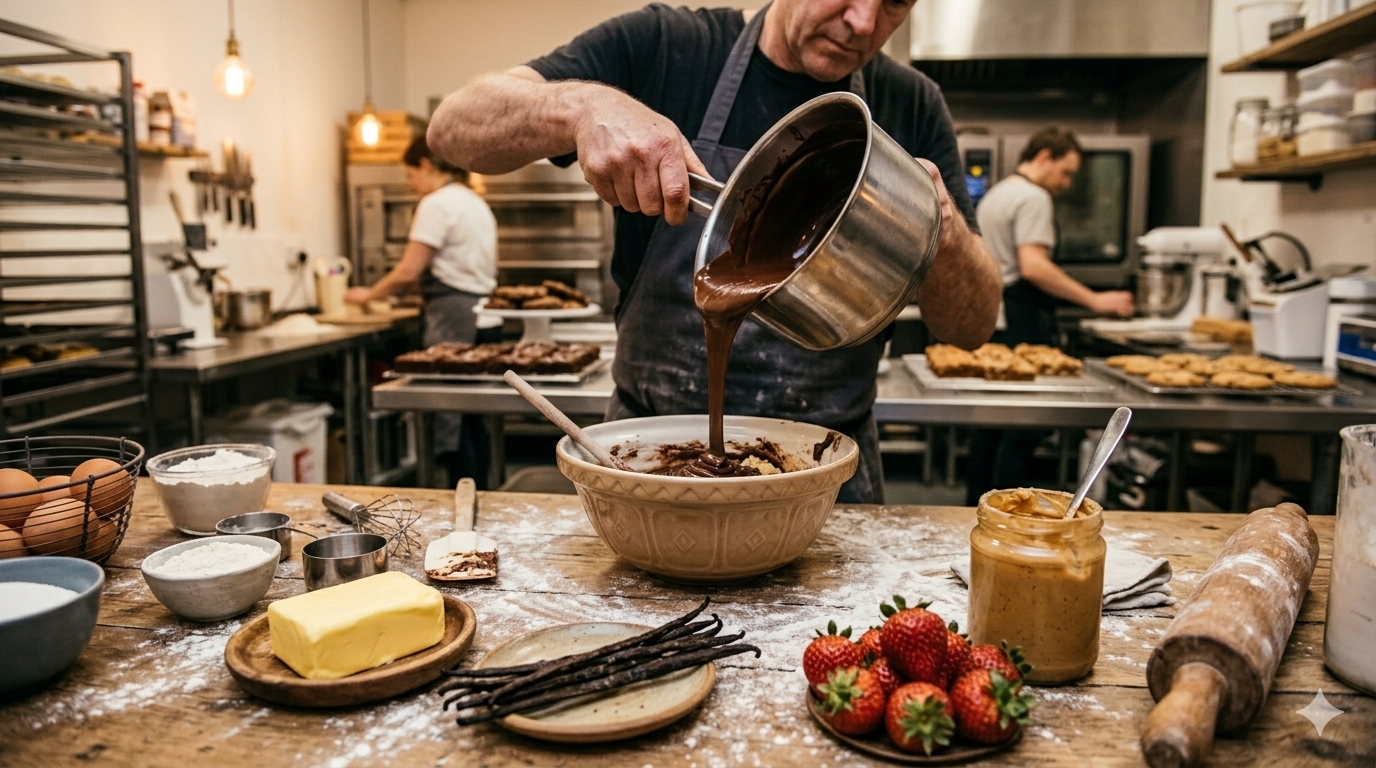
Mixing dessert batters might seem straightforward—combine ingredients and stir—but the reality is considerably more nuanced. Over-mixing develops too much gluten, creating tough, cake-like textures instead of the fudgy consistency our signature brownies are known for. Under-mixing leaves ingredient pockets that create inconsistency.
We use stand mixers for consistency, but the mixer is a tool, not a solution. Someone monitors the mixing process constantly, watching for visual cues that indicate proper development. The batter should reach a specific appearance and consistency—shiny, smooth, and properly incorporated without being overworked. This requires experience and attention that can’t be automated.
Different desserts require different approaches. Our Ruby Red Velvet incorporates both chocolate and the acidic components that give red velvet its characteristic flavor. These ingredients must be added in the correct order and mixed to precise consistency. The cream cheese frosting component gets prepared separately with its own careful process before being artfully swirled onto the brownie base.
For items like our Reese’s Peanut Butter Brownie, we’re working with two distinct mixtures that need to be combined strategically. Too much marbling and the flavors become muddled; too little and you lose the visual appeal and distinct flavor pockets that make this variety special. Achieving the right balance requires practiced judgment.
Once batters are prepared and pans are filled, baking begins—but not without careful consideration. Oven temperature is verified with thermometers rather than trusting dial settings, as even slight variations affect outcomes. Our ovens are positioned and loaded strategically to ensure even heat distribution.
The thickness of our brownies—nearly two inches—requires longer baking times than typical thin brownies, but not simply proportionally longer. The relationship between thickness and baking time isn’t linear, and finding the precise timing required extensive testing during recipe development. We set timers, but we also rely on visual and tactile cues that indicate proper doneness.
The fudgy texture that defines our brownies depends on pulling them from the oven at exactly the right moment. Too early and they’re underbaked in the center; too late and they lose that characteristic moisture. The window between perfect and overcooked can be surprisingly narrow, which is why we never leave the kitchen unattended during baking.
Different desserts require different approaches. Some items benefit from rotating partway through baking to ensure even browning. Others need their temperature adjusted as baking progresses. These aren’t written in any recipe—they’re learned through experience and attention to how specific items behave in specific ovens.
The aroma that fills the kitchen during baking is more than pleasant—it’s informative. Experienced bakers can detect subtle differences in smell that indicate how baking is progressing. This sensory feedback complements timers and visual inspection, creating a multi-dimensional approach to achieving consistent results.
Once brownies emerge from the oven, they need to cool properly. This isn’t simply about waiting until they’re safe to handle—it’s about allowing the structure to set properly. Cut too soon and you get messy edges and sections that stick to cutting tools. Wait too long and certain items become more difficult to portion cleanly.
The cooling process happens on wire racks that allow air circulation underneath. This prevents condensation from accumulating on the bottom, which would create soggy textures. The environment where cooling happens matters too—excessive humidity or temperature extremes can affect the final product.
Cutting is performed with clean, sharp blades, and we clean between cuts to maintain neat edges. For our thick brownies, this means using substantial cutting tools that can handle the density without compressing the product. The generous two-inch thickness that makes our brownies special also makes them more challenging to portion neatly, requiring skill and proper equipment.
Quality inspection happens during cutting. This is when we can see the interior texture, verify proper consistency throughout, and ensure color is correct. Items that don’t meet standards get set aside. They’re not sold, not given away as “seconds”—we simply don’t compromise on what reaches customers.
Proper packaging serves multiple purposes: protecting the product, maintaining freshness, and presenting items attractively. Our packaging choices reflect understanding of what each dessert needs. Items staying in-house for immediate sale have different requirements than those being shipped across the country.
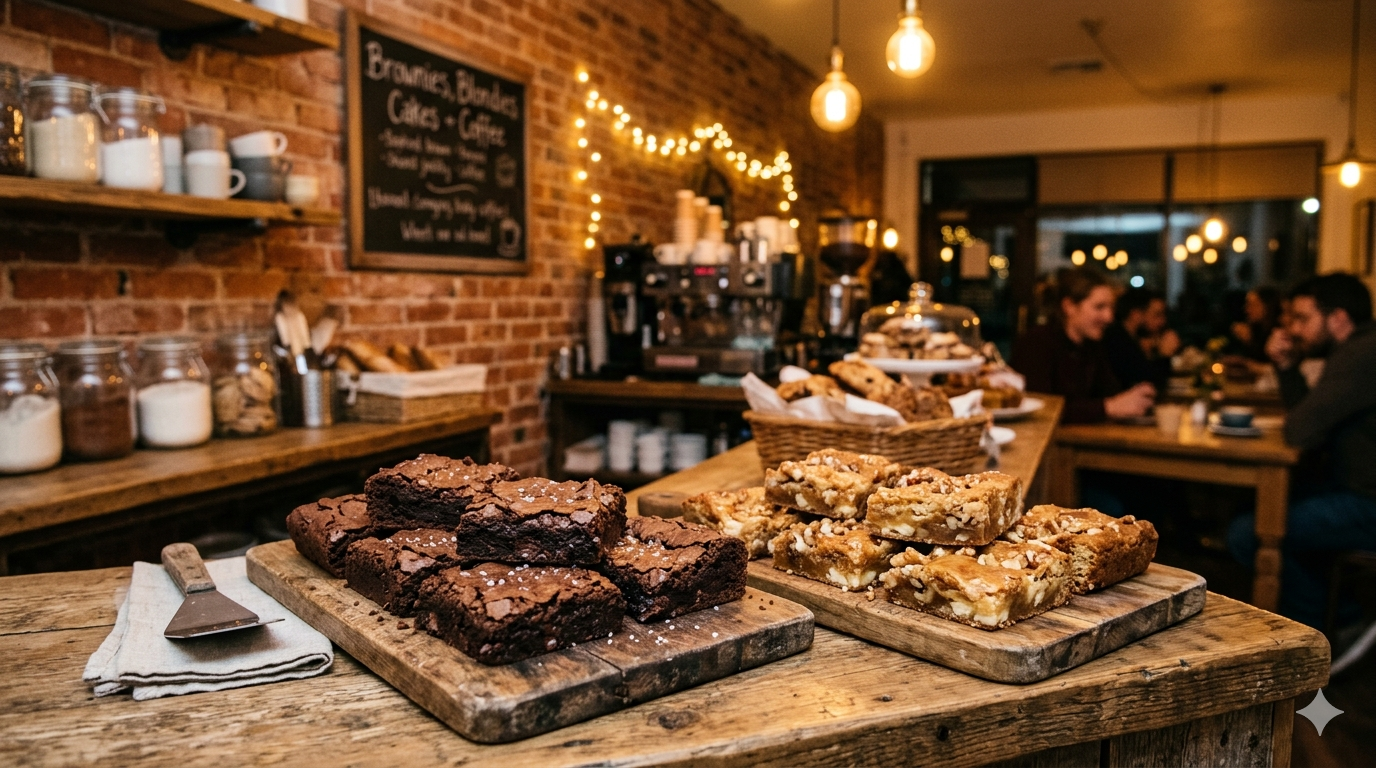
For items remaining at our locations—whether at 8302 W Glendale Ave in Glendale, AZ 85305 or 13802 N Verbena St in El Mirage, AZ 85335—we use containers that showcase the desserts while protecting them from handling and environmental exposure. The visual appeal matters; customers eat with their eyes first.
Shipping packaging represents a more complex challenge. The desserts need protection from jostling during transit, insulation from temperature variations, and securing that prevents movement within the container. We’ve developed packaging systems through trial and error, learning what works and what doesn’t through actual shipping experience.
Each package includes information about storage and best consumption practices. While our treats remain delicious for days or even weeks when properly stored, we want customers to enjoy them at peak quality. Clear guidance helps ensure the best possible experience.
Treat Dreams operates two locations, and while both maintain identical quality standards, each has its own character and serves its community differently. The Glendale location (phone: 623-200-5556) and El Mirage location (phone: 623-253-5002) both follow the same processes and use identical recipes, ensuring customers receive the same excellent products regardless of which they visit.
Operating multiple locations while maintaining consistency requires strong systems and training. Every team member understands not just what to do but why—the principles behind each step rather than just following instructions mechanically. This deeper understanding enables them to make appropriate judgment calls when situations deviate from normal parameters.
The decision to maintain specific operating hours—Thursday through Friday from 5pm to 10pm and Saturday through Sunday from 3pm to 10pm—reflects our commitment to being fully staffed and prepared during open hours rather than spreading resources thin across more days. When we’re open, we’re ready to provide the complete Treat Dreams experience.
Every baked dessert café faces decisions about how to scale operations. Growth is tempting—more locations, longer hours, larger production runs. But growth without maintaining quality defeats the purpose of what we’re trying to achieve. The small-batch philosophy isn’t about staying small for its own sake; it’s about protecting what makes our desserts special.
Mass production requires standardization and process optimization that often conflict with maximizing quality. Ingredients get selected based on how they perform in industrial equipment rather than how they taste. Processes get designed around efficiency rather than peak flavor development. These are rational business decisions at certain scales, but they’re not compatible with our mission.
We’ve seen bakeries start with excellent products, grow rapidly, and lose the very characteristics that made them successful. The decision to remain committed to small-batch production is deliberate—it’s choosing to preserve quality even when it means foregoing certain growth opportunities.
This doesn’t mean we’re opposed to growth entirely. Operating two successful locations demonstrates that thoughtful expansion is possible while maintaining standards. But we expand carefully, ensuring each location has the resources, training, and oversight necessary to deliver authentic Treat Dreams quality.
Operating as a small-batch baked dessert café creates opportunities for customer relationships that larger operations simply can’t replicate. We know our regular customers, remember their preferences, and genuinely enjoy the interactions that happen during their visits. This connection matters—it makes what we do more meaningful and helps us understand what our community values.
Customer feedback directly influences our operations. When people consistently request certain items, we make sure they’re regularly available. When someone mentions that a particular variety is their absolute favorite, we remember. These personal connections inform our decisions about what to make and how to serve our community.
The willingness to accommodate special requests when possible reflects this relationship-oriented approach. While we can’t fulfill every request—some things are outside our capabilities or conflict with our quality standards—we genuinely try to help when feasible. For larger or more complex requests, customers can reach us at cs@treatdreamsinc.com to discuss possibilities.
Consistency in small-batch production requires skilled team members who understand both the processes and the principles. Training new team members involves more than demonstrating procedures; it requires conveying why each step matters and what we’re trying to achieve.
Someone learning to mix batters needs to understand not just the sequence of adding ingredients but what properly mixed batter looks and feels like. They need to recognize when something’s not right and understand the factors that could cause variations. This deeper knowledge enables independent judgment rather than blind adherence to instructions.
Quality standards are maintained through both training and systems. Regular evaluation ensures that products continue meeting our specifications. If something starts drifting—items baking slightly too dark, texture becoming a bit denser than ideal—we identify and correct it quickly rather than letting gradual changes accumulate into problems.
Modern operations require integrating traditional craft with contemporary convenience, which is where our online ordering system enters the picture. Customers can browse our offerings and place orders from home, but fulfillment happens through the same careful process as everything we make for in-person customers.
Online orders get incorporated into our production schedule, with batches planned to accommodate both retail and shipping needs. An order placed today is typically baked within 48-72 hours and shipped, ensuring maximum freshness upon arrival. This quick turnaround requires efficient scheduling but never at the expense of quality.
Shipping products successfully means understanding how they’ll handle transit conditions and packaging accordingly. We’ve developed methods that protect our desserts during shipping while maintaining the characteristics that make them special. Customer feedback about shipped orders consistently mentions being impressed by condition upon arrival, validating our packaging approaches.
Beyond direct retail and online sales, Treat Dreams supplies wholesale partners who want to offer their customers exceptional desserts. These relationships extend our reach while presenting unique challenges—how do we ensure quality when products are handled by others?
The answer involves selecting partners carefully and providing clear guidance about handling and storage. We supply the same products we sell directly, without compromising quality for wholesale contexts. Partner businesses receive items baked to the same standards as everything else we produce.
Wholesale relationships work when partners understand and value what makes our treats special. They’re not just buying brownies to fill display cases; they’re offering their customers a specific quality experience. This alignment of values ensures that the Treat Dreams name maintains meaning wherever it’s encountered.
Commitment to small-batch quality doesn’t mean resisting all change. We continuously evaluate our processes, considering whether new techniques or equipment could improve results without compromising the characteristics we value. Innovation that enhances quality without sacrificing craft fits perfectly within our philosophy.
New product development happens regularly, with items like our Banana Bam brownie representing successful innovation. But not every experiment makes it to the menu—ideas must prove themselves through testing and customer response. We’re comfortable discarding concepts that don’t meet our standards rather than introducing them simply to have something new.
The process of refining recipes never truly ends. Even our core items benefit from occasional small adjustments as we discover better techniques or ingredient sources. These refinements are subtle—customers shouldn’t notice dramatic changes—but they represent ongoing commitment to being as good as possible.
What does “small-batch” actually mean at Treat Dreams?
Small-batch production at Treat Dreams means we bake desserts in limited quantities rather than mass-producing hundreds or thousands of units at once. Our batches are sized based on what we can bake, monitor, and quality-check carefully while maintaining the high standards our customers expect. This approach allows us to use techniques and ingredients that wouldn’t work at industrial scale. Each batch receives individual attention throughout the process, from mixing to baking to cooling to packaging. We can adjust timing, temperature, and technique based on how specific batches are developing rather than treating everything as identical. This careful attention ensures consistency while allowing for the nuanced adjustments that separate good desserts from exceptional ones. Small-batch production also means we bake more frequently rather than making huge quantities that sit around, which directly contributes to the freshness that customers notice when they try our products.
How do you maintain consistency across different batches and locations?
Consistency requires three elements: standardized processes, skilled team members, and quality control systems. We’ve documented our recipes and procedures in detail, but documentation alone isn’t sufficient—team members need to understand the principles behind each step. Training emphasizes recognizing what correct results look and feel like, enabling staff to make appropriate adjustments when conditions vary. Both our Glendale and El Mirage locations follow identical procedures using the same equipment and ingredient sources. Regular communication between locations ensures any insights or adjustments get shared. Quality control happens through visual inspection of every item we produce, with items that don’t meet standards being rejected rather than sold. We also maintain calibration of equipment like ovens and mixers to ensure they’re performing consistently. Perhaps most importantly, we foster a culture where quality matters more than quantity—team members understand that maintaining standards is more important than hitting production targets.
Can I visit the kitchen or see how desserts are made?
While we appreciate customer interest in our process, our kitchen is a working production space rather than a demonstration area open for tours. Food safety regulations, insurance considerations, and practical workflow needs mean we can’t routinely accommodate visitors in the kitchen. However, both of our locations feature areas where customers can see into the kitchen and observe some of the work happening. We’ve designed our spaces to allow this visibility because we’re proud of our process and have nothing to hide. Staff members are always happy to answer questions about how items are made, what ingredients we use, and why we approach things the way we do. For customers with specific questions or interest in our process, conversations with our team often provide insights into our methods. We’ve also considered offering occasional special events where interested customers could see more of the process, though scheduling such events requires balancing multiple considerations.
What happens to items that don’t meet your quality standards?
Items that don’t meet our standards during quality inspection don’t make it to customers—period. Depending on the specific issue, they might be kept for team evaluation to understand what went wrong, or they’re simply disposed of. We don’t sell “seconds” at reduced rates or give away items that failed quality checks. This policy might seem wasteful, but it’s essential for maintaining trust. If customers know that everything carrying the Treat Dreams name has been approved through our quality standards, they can purchase with confidence. The alternative—selling items with minor flaws at discounts—would undermine that trust and potentially damage our reputation. Rejected items are rare because our processes are designed to prevent problems, but when they occur, we accept the loss rather than compromising. This commitment to only releasing items we’re proud of is fundamental to who we are as a small-batch operation.
How far in advance should I place custom or large orders?
For custom requests or large orders—whether for events, celebrations, or other special needs—we recommend contacting us as far in advance as possible. This allows us to discuss what you’re looking for, confirm we can accommodate your needs, and schedule production appropriately. Our small-batch approach means we can’t simply increase production instantly; we need to plan for larger orders to ensure quality isn’t compromised. For significant orders, two to three weeks notice is ideal, though we’ll work with shorter timeframes when possible. You can call either location (623-200-5556 for Glendale or 623-253-5002 for El Mirage) or email cs@treatdreamsinc.com to discuss your needs. We’ll be honest about what we can accomplish and when, ensuring expectations align with reality. Planning ahead benefits everyone—you get certainty that your order will be ready when needed, and we can schedule production to maintain our quality standards while fulfilling your request.
Do you ever plan to expand to more locations or longer hours?
Growth decisions at Treat Dreams are guided by our commitment to maintaining quality rather than expanding for expansion’s sake. We currently operate two locations successfully while preserving the standards that define us. Opening additional locations would only make sense if we could ensure they’d maintain the same quality and receive proper oversight. Similarly, extending our hours would need to work practically with our small-batch production approach and staffing capabilities. We’re certainly not opposed to growth—our second location proves thoughtful expansion is possible—but we prioritize doing things right over doing them quickly. Any future expansion would be implemented carefully, ensuring we maintain the characteristics that make Treat Dreams special. Our current operating schedule of Thursday-Friday 5pm-10pm and Saturday-Sunday 3pm-10pm allows us to be fully staffed and prepared during open hours, which serves our customers better than spreading resources thin across more hours with compromised quality or service.
Walking through a day at Treat Dreams reveals why small-batch desserts taste noticeably different from mass-produced alternatives. The care invested in every stage—from ingredient selection through final packaging—accumulates into products that justify the enthusiasm our customers express. This isn’t marketing language; it’s observable reality that anyone comparing our treats to typical bakery offerings will immediately recognize.
The decision to operate as Treat Dreams Inc—committed to small-batch production even as that limits certain growth opportunities—reflects fundamental beliefs about what matters. Making fewer desserts excellently serves our customers better than making more desserts adequately. This philosophy guides every decision and explains why we’ve earned the loyalty we have.
Understanding our process intellectually is valuable, but nothing replaces actually tasting the difference that small-batch production creates. Visit us at either location—8302 W Glendale Ave in Glendale or 13802 N Verbena St in El Mirage—during our operating hours. Talk with our team, ask questions about what we make and how we make it, and most importantly, try our desserts.
For those unable to visit in person, our online ordering makes experiencing Treat Dreams possible wherever you live. Browse our selection, place an order, and discover why we’re so committed to the small-batch approach. The proof isn’t in explanations about process; it’s in the taste, texture, and satisfaction that comes from desserts made with genuine care and uncompromising standards.
Your next exceptional dessert experience awaits. Whether in person or through online ordering, we look forward to sharing what makes Treat Dreams special.