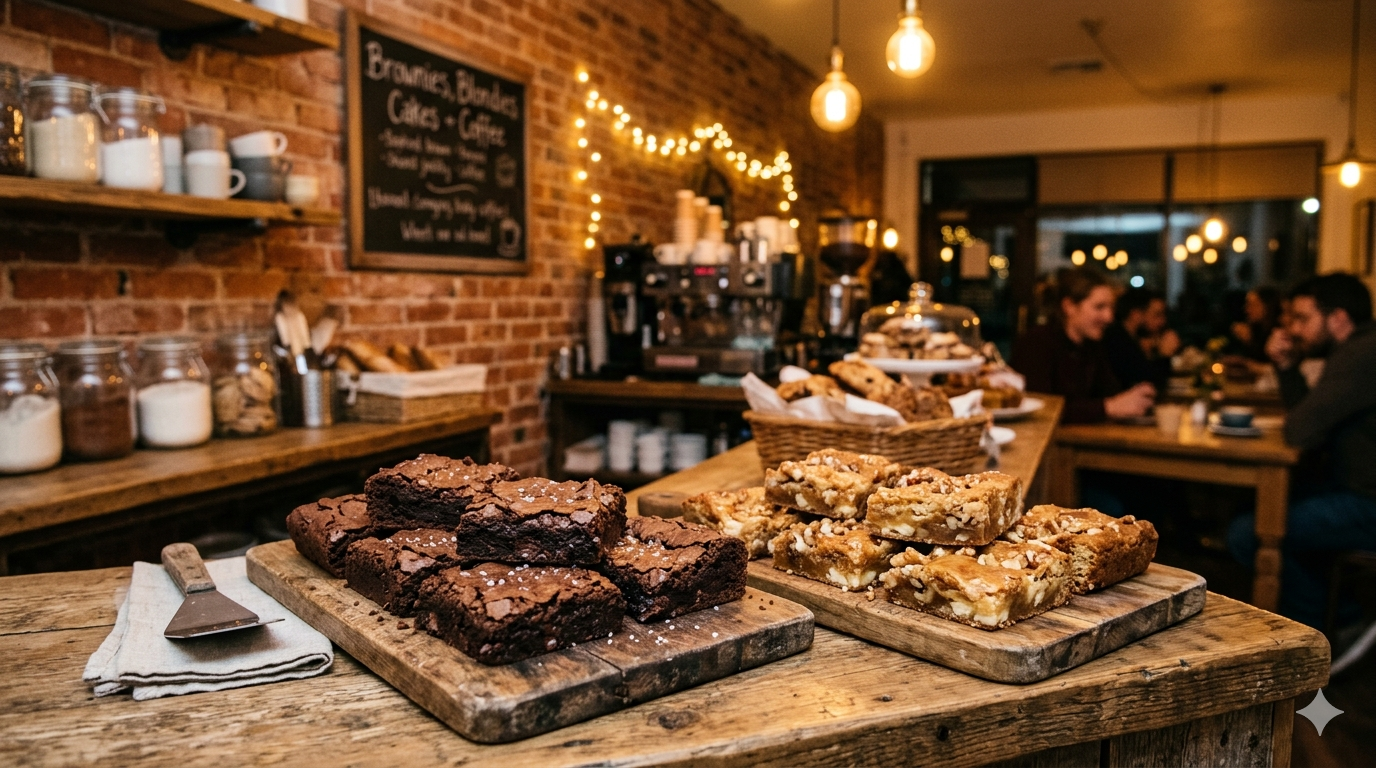

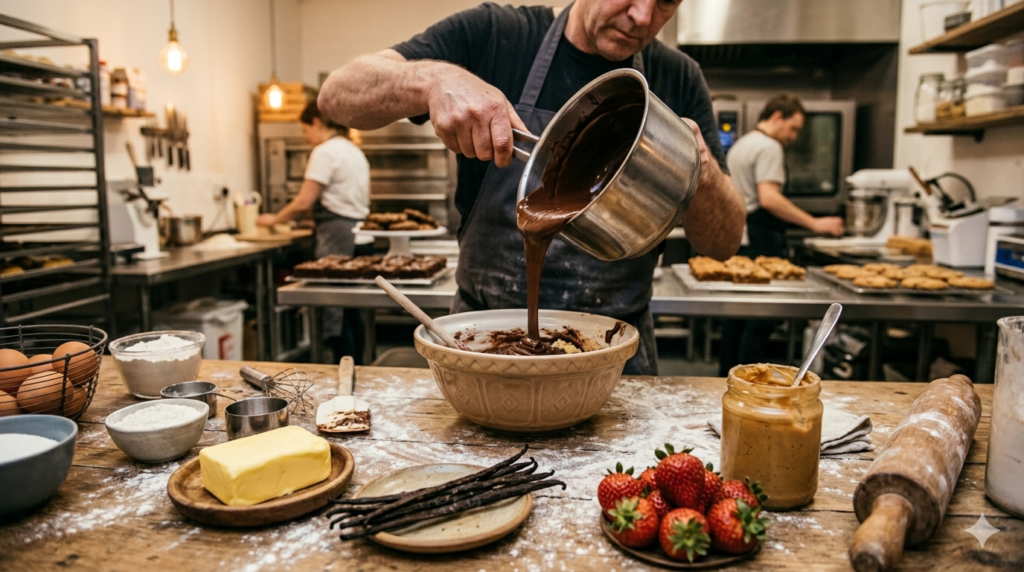
Most people never think about what goes into developing a new brownie flavor. They walk into a bakery, scan the display, pick something that looks good, and move on with their day. And that is fine for most bakeries, because most bakeries do not put much thought into it either. They pick a trending flavor, fold it into a standard base recipe, and put it on the shelf.
That is not how things work at Treat Dreams Inc. Not even close.
This is a bakery where a single new flavor can take weeks — sometimes months — of testing before it earns a spot on the rotating menu. Where the difference between a good brownie and a great one comes down to decisions that most customers will never see: how ripe the bananas need to be, whether the peanut butter should be swirled or layered, how much cream cheese frosting a red velvet brownie can handle before the tang overwhelms the cocoa. These are the kinds of conversations that happen in the kitchen at Treat Dreams Arizona, and they are the reason the finished products taste the way they do.
Here is what actually happens behind the scenes when this small-batch baked dessert café creates a new flavor from the ground up.
Every new brownie flavor at Treat Dreams begins with an idea, and ideas come from everywhere. Customer requests. Seasonal ingredient availability. A flavor combination someone on the team tasted at a restaurant and could not stop thinking about. Sometimes it is as simple as asking the question: what would happen if we took this classic dessert concept and rebuilt it as a brownie?
But having an idea and executing it are two completely different things. The team learned this early on. You cannot just take a flavor that works in one format — a cake, a cookie, a cocktail — and assume it will translate directly into a brownie. Brownies have their own rules. The batter is denser. The baking time is shorter. The moisture content has to hit a very specific range or the whole thing falls apart. A flavor that works beautifully in a light, airy cupcake might taste completely wrong when compressed into two inches of fudgy brownie.
So the first step in creating any new flavor is not baking. It is thinking. The team talks through how a particular flavor profile will interact with the existing brownie base. Will it need more fat to carry the flavor? Will it change the baking time? Will the add-in release moisture during baking and alter the texture? These questions get answered before anyone turns on an oven.
This is the kind of detail work that separates a place like Treat Dreams from the average bakery. It is also why the story behind these treats reads less like a business origin and more like a slow, deliberate pursuit of getting things right.
One of the biggest misconceptions about bakeries that offer multiple flavors is that they use a single base recipe and just add different stuff to it. Throw in some peanut butter chips for one variety, swap in some strawberry pieces for another, call it a day.
That approach works if you are trying to fill a display case. It does not work if you are trying to make something genuinely memorable.
At Treat Dreams, the base brownie recipe is not static. It shifts depending on what the final product needs to be. The signature fudgy texture that defines the classic chocolate brownie relies on a specific fat-to-flour ratio and a heavy emphasis on melted chocolate over cocoa powder. But when the team develops something like a fruit-forward blondie, the entire foundation changes. Brown sugar replaces some of the white sugar. Vanilla extract takes center stage. The chocolate steps back or disappears entirely.
Understanding the real difference between brownies and blondies is critical here, because the base recipe for each is fundamentally different. A blondie is not just a brownie without chocolate. The flavor architecture, the sugar behavior during baking, the role of butter — all of it shifts. And when you are building a new flavor on top of an already nuanced base, every variable matters.
This is why the team at Treat Dreams does not rush development. A new flavor might go through a dozen iterations before it reaches the version that actually gets served.
Here is something that does not make it into marketing materials: most new flavor ideas do not survive testing. Not because they taste bad, necessarily, but because they do not taste good enough.
The standard at Treat Dreams is not “is this acceptable?” It is “would someone drive across town for this?” That is a much harder bar to clear. An acceptable brownie is easy. A brownie that creates a genuine craving, that someone thinks about three days later, that becomes the thing they recommend to friends — that requires a level of refinement that only comes through repetition.
Testing happens in small batches, which is one of the advantages of the small-batch production model the bakery operates on. Rather than committing to a large production run of an untested flavor, the team bakes a small quantity, evaluates it internally, adjusts the recipe, and bakes again. This cycle might repeat five or six times for a straightforward variation, and many more times for something complex.
Take the Ruby Red Velvet as an example. Red velvet is a well-known flavor, but translating it into brownie form was not straightforward. The characteristic tang from buttermilk and vinegar had to balance against the density of the brownie base. The cream cheese frosting component — essential to any proper red velvet experience — needed to complement rather than dominate. The visual element mattered too, because red velvet is as much about how it looks as how it tastes. That single flavor took extensive experimentation before it reached the version that eventually became one of the most requested items in the shop.
The core menu at Treat Dreams stays relatively stable. Those are the flavors that customers depend on — the ones they know they can get every time they visit. But alongside that core, the bakery runs a rotating seasonal and weekly menu that pushes into more adventurous territory.
Seasonal development follows the rhythm of the calendar and ingredient availability. Spring brings citrus and berries. Summer opens the door for tropical combinations. Fall is when warming spices and deeper, richer profiles tend to show up. This is where the team gets to experiment with flavor pairings that might feel too unusual for the permanent menu but work perfectly as a limited-time offering.
The Picante Mango is a good example of how far that experimentation can go. Mango and chili heat in a brownie sounds like an odd combination on paper, but the execution is deliberate. The sweetness of the mango plays against a gentle warmth from the spice, creating something that surprises people without overwhelming them. It is not a gimmick — it is the result of careful calibration to make sure the heat serves the flavor rather than competing with it.
These seasonal releases also serve as a testing ground for potential permanent additions. If a limited-time flavor generates enough demand and repeat requests, it earns consideration for the core lineup. The Banana Bam brownie followed this path — it started as an experiment, proved itself through customer response, and became a regular presence on the menu.
Behind every great flavor is a sourcing decision that most customers never see. The quality of the chocolate, the freshness of the butter, the type of vanilla extract — these choices happen long before any baking begins, and they define the ceiling of what the finished product can achieve.
Treat Dreams uses real butter, premium chocolate, and whole milk. No margarine. No artificial flavoring. No shelf-stable substitutes designed to save money at the expense of taste. When you read through the bakery’s origin story, you will notice that this commitment to ingredients was there from the beginning. It was not a marketing position that got added later — it was the founding principle.
This matters more than people realize. Chocolate, for instance, varies enormously in quality. The cacao percentage, the processing method, even the origin of the beans all affect the final flavor. A brownie made with premium dark chocolate tastes fundamentally different from one made with a lower-grade baking chocolate, even if the recipe is identical in every other way. The same holds true for vanilla — real vanilla extract from quality beans has a complexity and depth that imitation vanilla simply cannot replicate.
For flavors that involve additional ingredients — peanut butter, fruit, cream cheese — the sourcing standards remain the same. The peanut butter in the Reese’s Peanut Butter Brownie is real Reese’s product, chosen specifically because it carries a flavor profile that resonates with people on a nostalgic level. That specificity is intentional. It would be cheaper to use a generic peanut butter, but it would not taste the same.
Flavor and texture are not separate considerations — they are deeply intertwined, and developing one without accounting for the other produces mediocre results. This is something the team at Treat Dreams has learned through years of baking, and it informs every new recipe.
A perfect example is how different add-ins affect the structural integrity of a brownie. Bananas introduce extra moisture, which means the baking time needs to extend slightly or the flour ratio needs to adjust to prevent the center from staying too wet. Peanut butter adds fat, which can shift the fudgy-to-cakey balance if not accounted for. Cream cheese frosting layers on top of a brownie interact differently during cooling than a simple ganache would.
The goal is always to make the texture feel intentional rather than accidental. When someone bites into a Blondie Bombshell, the chewiness should feel like a design choice. When a fudgy brownie practically melts on contact with your tongue, that density is not the result of underbaking — it is the result of carefully managing the fat-to-flour ratio, the egg yolk content, and the cooling process.
Understanding brownie texture types is something the Treat Dreams team takes seriously because it is something customers feel even if they cannot name it. People know when a brownie feels right. They might not be able to explain the difference between chewy and fudgy in technical terms, but they absolutely know which one they prefer. The development process accounts for that instinct.
No flavor exists in isolation from the people eating it. One of the most valuable parts of the development process at Treat Dreams happens after a new flavor hits the menu, when real customers start sharing their reactions.
The bakery actively listens to what people say — not just whether they liked something, but how they describe it, what they paired it with, whether they came back for it specifically. This feedback loops directly back into recipe refinement. Sometimes a flavor is close but needs a slight adjustment. Maybe the sweetness level could drop a touch, or the add-in ratio could shift to give more presence to a secondary flavor.
This feedback-driven approach is one of the benefits of operating as a local, community-connected baked dessert café in Arizona rather than a national chain. The people making the brownies interact directly with the people eating them. There is no corporate layer between the baker and the customer, no months-long approval process for a minor recipe tweak. If a flavor needs adjustment, it gets adjusted in the next batch.
For anyone who wants to share feedback directly, the team is reachable at cs@treatdreamsinc.com or through the contact page. They are also available by phone at the Glendale location (623-200-5556) or the El Mirage location (623-253-5002).
Treat Dreams operates Thursday and Friday from 5 PM to 10 PM and Saturday and Sunday from 3 PM to 10 PM. Those hours sometimes surprise first-time visitors who expect a bakery to be open all day, every day. But the limited schedule is not a constraint on the business — it is a feature that directly supports the quality of every product, including new flavor development.
When you are not grinding through twelve-hour service days, there is space to think, experiment, and refine. The time outside of service hours is when recipe development actually happens. It is when the team can bake test batches without the pressure of needing to simultaneously fill customer orders. That breathing room is essential for the kind of deliberate, iterative work that produces genuinely unique flavors rather than rushed additions.
It also means that everything on the shop page during service hours is freshly made. Not reheated. Not pulled from inventory that has been sitting around for days. Fresh, current, and reflective of the latest refinements.
There is a version of this story that is common in the food industry. Someone has bakery dreams — a vision of opening a place that makes people happy through food — and reality slowly grinds that vision down. Costs go up. Shortcuts start looking reasonable. The menu expands to chase revenue even as quality quietly drops.
That is not what happened at Treat Dreams. The vision stayed intact. The insistence on quality ingredients did not waver. The small-batch approach held even when scaling up would have been easier and more profitable. And the result is a bakery where walking in and tasting a brownie still feels like discovering something genuinely special, not just consuming another mass-produced dessert with a clever name.
For anyone who has never visited, the Glendale location is at 8302 W Glendale Ave, Glendale, AZ 85305. The El Mirage spot is at 13802 N Verbena St, El Mirage, AZ 85335. Both locations serve the same recipes, maintain the same standards, and share the same commitment to making sweet dreams treats that are worth every bit of the effort that goes into creating them.
If you run a business interested in carrying these products, the wholesale program is worth exploring. And if you simply want to taste what thoughtful, obsessive, no-shortcut flavor development actually produces — just show up on a Thursday evening and ask for a sample. The brownies will do the rest.
How does Treat Dreams develop new brownie flavors?
New flavors go through an extended development process that begins with concept evaluation and moves through multiple rounds of small-batch testing. The team assesses how each flavor interacts with the brownie base, adjusts ingredient ratios, and refines the recipe over several iterations before any new flavor reaches the menu.
How often does the Treat Dreams menu change?
The core menu of signature flavors remains consistent so customers can always find their favorites. Alongside that, the bakery introduces seasonal and weekly rotating specials that feature limited-time flavors inspired by seasonal ingredients and creative experimentation.
What ingredients does Treat Dreams use in its brownies?
Treat Dreams uses real butter, premium chocolate, fresh whole milk, and quality vanilla extract. There are no artificial flavorings, margarine, or shelf-stable substitutes. Every ingredient is selected for flavor quality rather than cost savings.
Why are Treat Dreams’ operating hours limited?
The bakery operates Thursday through Friday from 5 PM to 10 PM and Saturday through Sunday from 3 PM to 10 PM. These focused hours ensure every product is baked fresh during the service window and allow time outside service for recipe development, testing, and quality preparation.
Where can I try Treat Dreams brownies in Arizona?
Treat Dreams has two locations: 8302 W Glendale Ave, Glendale, AZ 85305 (phone: 623-200-5556) and 13802 N Verbena St, El Mirage, AZ 85335 (phone: 623-253-5002). Online ordering is also available through the website for those who cannot visit in person.
Can I suggest a new brownie flavor to Treat Dreams?
Absolutely. The team welcomes customer input and has incorporated feedback into past recipe decisions. You can reach them through email at cs@treatdreamsinc.com or by calling either location during business hours.
Does Treat Dreams offer seasonal or limited-edition flavors?
Yes. Seasonal releases follow the calendar and ingredient availability — tropical fruit combinations in summer, warming spice profiles in fall, and bright citrus or berry flavors in spring. These limited-time offerings occasionally earn permanent spots on the menu based on customer demand.
What is the difference between a brownie and a blondie at Treat Dreams?
Brownies are built on a chocolate base with a rich, intense flavor profile. Blondies replace the chocolate with a brown sugar and vanilla foundation, producing a butterscotch-like warmth. Both receive equal attention in recipe development and are treated as distinct product lines rather than variations of the same recipe.